What Is Digital Marketing? A Simple Guide for Beginners
Quick Summary
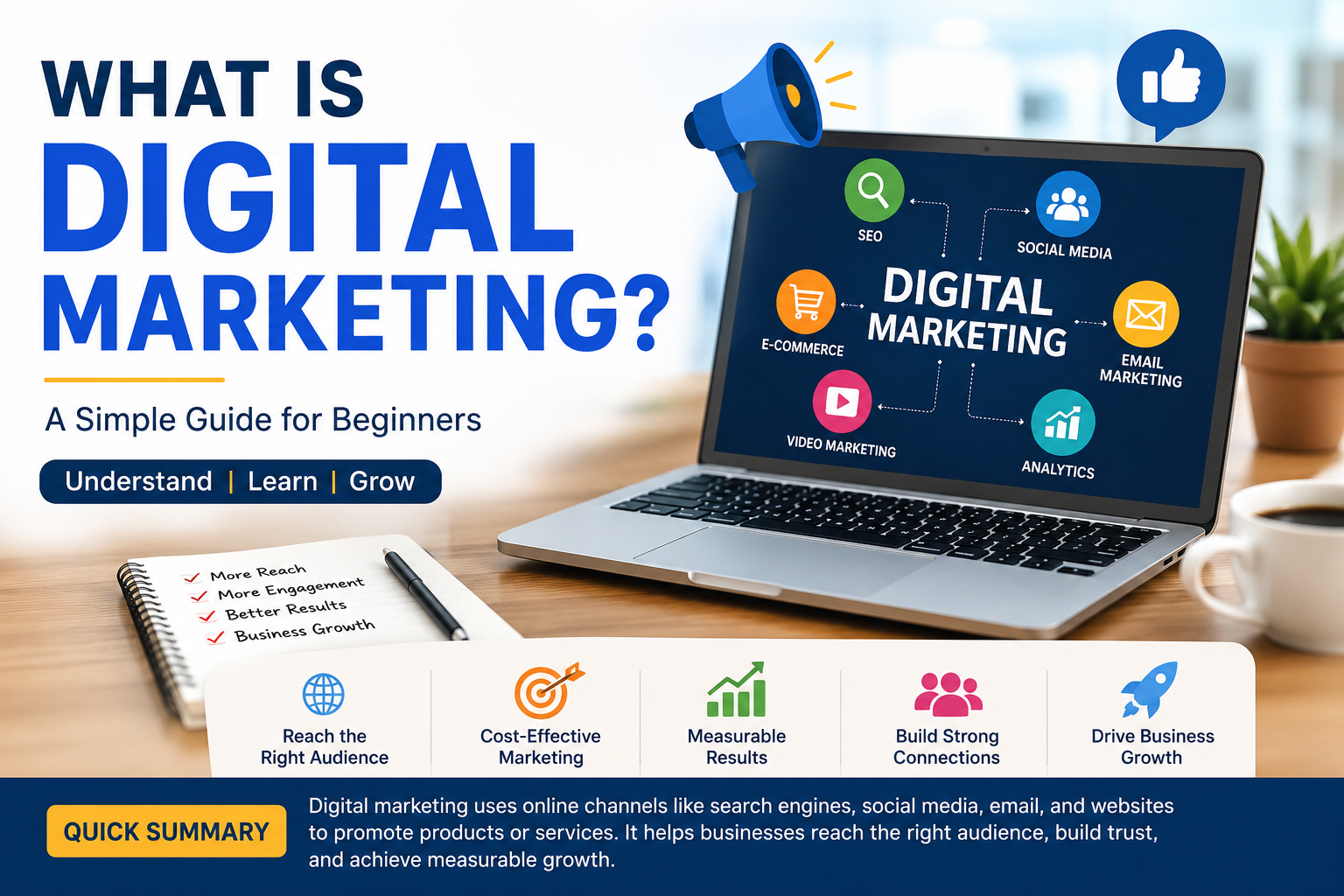
Digital marketing is the process of promoting products, services, or brands through online channels such as search engines, social media, websites, email, and online advertising. It helps businesses reach the right audience, build brand awareness, generate leads, and measure their marketing results. The main types of digital marketing include SEO, social media marketing, content marketing, email marketing, affiliate marketing, influencer marketing, and video marketing. For beginners, learning digital marketing can be a useful way to build practical skills and explore career opportunities in the digital world.
Table of Contents
Introduction
If you are wondering what is digital marketing, you are not alone. Businesses today use the internet to reach customers, build their brands, and sell products or services. From a Google search to an Instagram post or an email from your favourite brand, digital marketing is everywhere.
In simple words, digital marketing means promoting a product, service, or brand through digital channels such as search engines, social media, websites, email, and online advertising.
Unlike traditional marketing, digital marketing allows businesses to connect with people online and measure their results. This makes it useful for both small businesses and large companies.
In this blog, we will explain what is digital marketing, how it works, the major types of digital marketing, and the benefits of digital marketing. If you are a beginner, this guide will give you a clear starting point.
What Is Digital Marketing?
So, what is digital marketing in simple words?
Digital marketing is the process of promoting products, services, or brands using the internet and digital devices. Businesses can use different online platforms to attract people, communicate with customers, and encourage them to take action.
For example, imagine that a student searches Google for a digital marketing course. They find a useful blog, visit a course website, watch a video, and finally register for a course. Different digital marketing activities may have helped that student discover the course.
Digital marketing can include:
Search engines such as Google
Social media platforms
Websites and blogs
Email
Online advertisements
Videos
Mobile applications
The main goal is simple: reach the right audience through the right digital channel.
How Does Digital Marketing Work?
Understanding what is digital marketing becomes easier when you understand how it works.
A typical digital marketing process has a few basic steps.
1. Understand the audience
First, a business needs to know who its customers are. It may look at their interests, needs, age group, location, and online behaviour.
2. Create useful content
Next, the business creates content that helps or interests its audience. This could be a blog, video, social media post, guide, or infographic.
3. Choose the right channel
The business then chooses where to promote its content. For example, it may use Google for people searching for information or social media to reach people who are discovering new brands.
4. Bring visitors and leads
Good digital marketing can bring people to a website, social media page, landing page, or online store.
5. Measure the results
One major advantage of digital marketing is that businesses can measure performance. They can check website visits, clicks, leads, sales, engagement, and other results.
This process helps businesses understand what is working and what needs improvement.
Types of Digital Marketing
There are several types of digital marketing, and each one serves a different purpose. Beginners do not need to master everything at once. It is better to understand the basics first.
1. Search Engine Optimization (SEO)
SEO helps websites appear in search engine results when people search for relevant topics.
For example, if someone searches what is digital marketing, a website with useful and well-optimized content may appear in the search results.
SEO includes activities such as keyword research, content creation, on-page optimization, internal linking, and improving website structure.
2. Search Engine Marketing (SEM)
Search engine marketing involves using paid advertising on search engines. Businesses can create advertisements that appear when users search for specific keywords.
This can help a business reach potential customers quickly.
3. Social Media Marketing
Social media marketing means using platforms such as Instagram, Facebook, LinkedIn, and other social networks to connect with an audience.
Businesses can share educational content, product information, videos, offers, and updates.
4. Content Marketing
Content marketing focuses on creating useful and relevant content for an audience.
Examples include:
Blog posts
Videos
Guides
Infographics
Case studies
Educational posts
Good content can build trust and help people understand a product or service.
5. Email Marketing
Email marketing allows businesses to communicate directly with people through email.
Companies can use emails to share updates, educational content, offers, product information, and other useful messages.
6. Affiliate Marketing
Affiliate marketing involves promoting another company’s product or service and earning a commission when a specific action, such as a sale, takes place.
It is commonly used by websites, content creators, and other online publishers.
7. Influencer Marketing
Influencer marketing involves working with online creators who have an audience in a particular area.
A business may collaborate with an influencer to introduce its product or service to that audience.
8. Video Marketing
Video marketing uses videos to communicate with customers. Businesses can create tutorials, demonstrations, educational videos, interviews, or short-form content.
Video can make complicated ideas easier to understand and can help brands connect with their audience.
Internal link opportunity: This is a good place to add an internal link to your existing blog if it explains any specific type of digital marketing, such as SEO, social media marketing, or content marketing.
Benefits of Digital Marketing
Now that you understand what is digital marketing and its major types, let’s look at the benefits of digital marketing.
1. Reach a wider audience
The internet allows businesses to reach people beyond their local area. A small business can potentially connect with customers in different cities or even different countries.
2. Cost-effective marketing
Some digital marketing methods can be more affordable than traditional advertising. Businesses can choose their budgets and select channels based on their goals.
3. Better audience targeting
Digital platforms allow businesses to target specific audiences based on different factors. This can help companies show relevant content or advertisements to people who may be interested.
4. Easy to measure
One of the biggest benefits of digital marketing is measurement.
Businesses can track metrics such as:
Website traffic
Clicks
Leads
Engagement
Conversions
Sales
This data helps marketers make better decisions.
5. Builds brand awareness
Regular online content can help people become familiar with a brand. Over time, useful content and consistent communication can help build recognition and trust.
6. Direct communication with customers
Digital marketing gives businesses many ways to communicate with their audience. Social media, email, websites, and other channels can make communication faster and more convenient.
7. Supports business growth
When businesses use the right strategy, digital marketing can help them attract visitors, generate leads, build relationships, and increase sales.
Why Should Beginners Learn Digital Marketing?
If you are a student, graduate, business owner, freelancer, or working professional, understanding what is digital marketing can be useful.
Almost every modern business needs an online presence. This creates a need for people who understand areas such as SEO, content, social media, advertising, analytics, and online communication.
You do not need to learn every tool on the first day.
Start with the basics. Understand how websites, search engines, social media, content, and online advertising work. Then choose an area that interests you and develop your skills step by step.
Learning through practical examples and projects can also make the concepts easier to understand.
Digital Marketing vs Traditional Marketing
Traditional marketing uses channels such as newspapers, television, radio, brochures, and outdoor advertising.
Digital marketing uses online channels such as search engines, websites, social media, email, and digital advertisements.
The biggest difference is the environment in which the audience is reached.
Digital marketing also provides detailed data about online activities. This allows marketers to understand how people interact with their campaigns and content.
However, traditional and digital marketing can work together. The right choice depends on the business, audience, budget, and marketing goal.
Conclusion
So, what is digital marketing?
Digital marketing is the use of digital channels to promote products, services, brands, and businesses. It includes SEO, social media marketing, content marketing, email marketing, online advertising, influencer marketing, video marketing, and other online activities.
The types of digital marketing may look different, but they share a common goal: connecting businesses with the right audience.
The benefits of digital marketing include wider reach, better targeting, measurable results, direct communication, and opportunities for business growth.
If you are a beginner, do not try to learn everything at once. Start with the basics, practise regularly, and gradually build your knowledge.
Start Learning Digital Marketing with Vidya Sarthi
Now that you know what is digital marketing, the next step is to turn your knowledge into practical skills.
If you want structured learning and want to build your understanding of digital marketing step by step, explore Vidya Sarthi and find a learning opportunity that matches your goals.
Start learning, build practical skills, and take the next step toward your digital career with Vidya Sarthi.
Type your paragraph here
Type your paragraph here